

Addiction is not a lack of will.
It is a jam at the exact instant relief feels truer than values. Diction Resolution Therapy (DRT) restores the inner interface that makes good choosing possible under pressure. We use clear language, small decisive acts, and calm attention. The result is fewer reflex weddings to relief and more honest moves you can repeat.
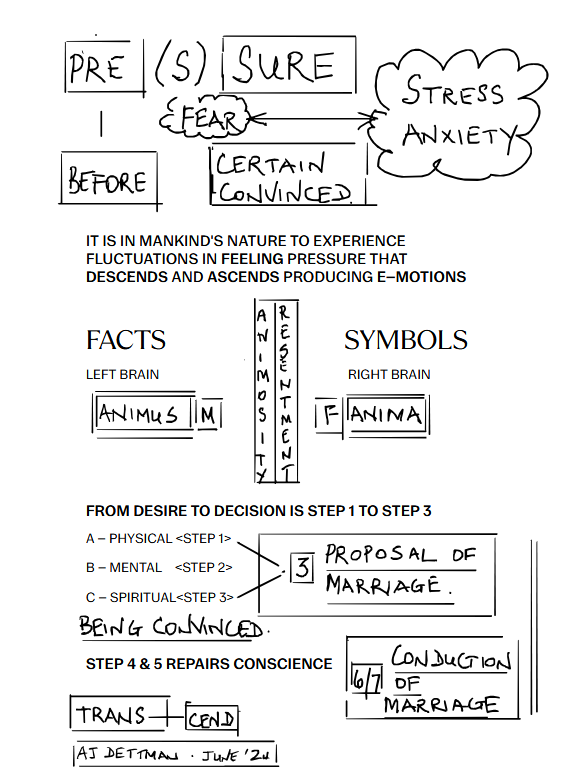
The map. Pressure to choice
- Pressure. Literally pre‑sure. Before you are sure, fear rises. The body reads that as stress and anxiety.
- Split. Head and heart pull apart. Facts without meaning give you overthinking. Meaning without facts gives you story‑spin. Resentment grows.
- Addiction point. Relief knocks. Values go quiet. This is the deciding instant.
- Two paths.
- Quick relief. Secret marriage to the thing. A short calm and a long cost.
- Valued choice. A small honest act that you can repeat tomorrow.
- Repair. If you chose relief, clean it. If you chose values, reinforce it.
- Transcend. Stable rhythm. Fewer cliff‑edge moments. A life that feels wider than urges.
Core tools you can use today
-
The Clean Sentence. Say one line out loud before you choose.
Template: Fact + Meaning + Value + Next move.
Example: “I am at 8 out of 10 arousal and want to drink because I want quiet and dignity. I will take a shower and text James now.” -
The 7‑minute DRT drill
- Name it. “This is the addiction point.”
- Measure. Arousal 0 to 10. Urge 0 to 10.
- Unite. One clean sentence using the template above.
- Choose. Minimum Good for 30 seconds. Water. Outside air. Timer for 10‑minute urge surf. Text a human.
- Log. One line in your phone: Arousal, Urge, Action, Result. If you slipped, add one repair you will make in 24 hours.
-
The Resolution Ladder
- Minimum Good. Tiny act that blocks the reflex. Example: put the bottle in the boot of the car and set a 10‑minute timer.
- Better. Swap activity. Cold face splash or brisk walk.
- Best. Valued action. Call sponsor. Start the sleep routine. Write two lines in the urge log.
-
Post‑lapse clean‑up
- Notice without drama.
- Name the trigger and the sentence that sold you the relief.
- Repair one thing today. Message, bin the stash, pay the small debt.
- Re‑choose a Minimum Good and log it.
Daily anchors that make choices easier
- Same wake time. A daylight walk within 60 minutes.
- Protein at breakfast. Water before caffeine.
- A 2‑minute evening audit. “What pressure did I feel. What sentence worked. What move will I repeat.”
Design your environment
- Remove obvious cues. Add friction to access.
- Put your Minimum Good in reach. Cold water ready. Shoes by the door. Sponsor on speed dial.
- Pre‑commitment scripts. “If urge is over 7, I call. If I cannot call, I start a 10‑minute timer and do the first step of my sleep routine.”
How this helps therapists and peers
- It gives a shared language for the deciding instant.
- It keeps talk practical. One sentence, one move, one log.
- It aligns easily with 12‑Step, SMART, or Refuge Recovery. Community handles belonging. DRT handles decision mechanics.
Who will feel the benefit fast
- People who say “I know what to do but I do not do it when it counts.”
- Anyone who spirals into overthinking or story‑spin when stressed.
- Those who want a secular path without losing depth or meaning.
Next steps
- Action. Run the 7‑minute drill once today. Put the template in your phone notes.
- Support. Choose one human to be your call at 2 a.m. Tell them the script.
- Peace. In crisis in the UK, attend A&E, speak to your GP, call Samaritans on 116 123, or dial 999.
Summary DRT turns a foggy moment into a measurable one. Name the state. Unite fact and meaning in a single sentence. Choose a Minimum Good you can do now.
Repair quickly if you slip. Repeat until the honest move is the easy move.